
RoadReady Ohio
Safe Roads Alliance, Inc.Auto & Vehicles
4.272.00 Reviews
- Version
- 0.0.11
- Installs
- 10.00K
- Age Rating
- Everyone
Screenshots
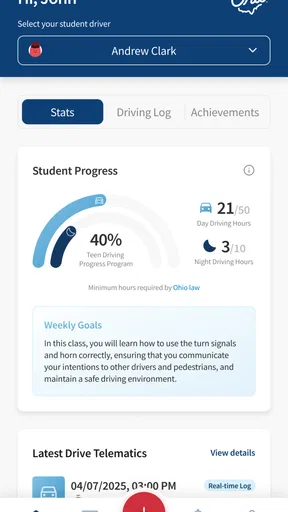
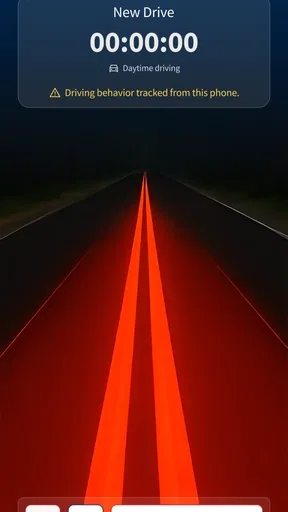
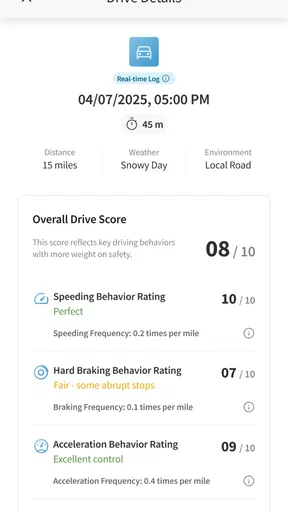
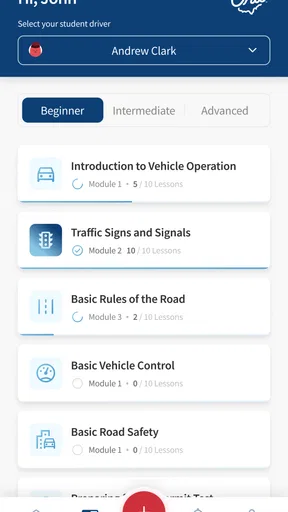
Our Review of RoadReady Ohio
 Analysis by Appyee
Learning to drive is one of those experiences where good intentions are not enough. A teenager may spend time behind the wheel, but without a clear record, it can be difficult for a parent or supervisor to remember how much practice happened, which conditions were covered, or what still needs attention. RoadReady Ohio is designed for that narrow but important part of the learner-permit stage: keeping track of teen driving practice in a way that is easier to review later.
I see it as a practical companion for families who want something more dependable than a paper notebook or scattered notes on a phone. It is an Auto & Vehicles app from Safe Roads Alliance, Inc., and its focus is not entertainment, vehicle shopping, navigation, or roadside assistance. Its purpose is much more specific: helping organize practice during the learner’s permit phase in Ohio.
The most important value point is simple: RoadReady Ohio is free to use. That makes it easy to try without turning the decision into a financial commitment. The app is rated for Everyone, so its intended audience is broad enough for teenagers, parents, and adult supervisors to use together. Its current version is 0.0.11, and the app has passed the early discovery stage with over ten thousand installs, a 4.2 average rating, and a few hundred ratings overall.
How RoadReady Ohio fits into real driving practice
I’d treat the driving log as a planning aid, not just a record to fill in after each trip. When a family reviews what has been practiced, it can choose one manageable next step and agree on who will record the session, making the routine easier to keep consistent. That shared habit is especially useful when more than one adult supervises.
A focused record for the learner-permit period
What I like about the app’s concept is that it addresses a task that is easy to underestimate. Driving practice is not only about getting more time on the road. It is also about remembering what kind of practice took place. A short trip around familiar streets does not build exactly the same confidence as a longer drive, a night session, a rainy commute, or a route with heavier traffic. A useful log can help a family see those differences instead of treating every drive as interchangeable.
In everyday use, I would treat RoadReady Ohio as a shared reference point for practice conversations. After a session, the teenager and supervising adult can record what happened while the details are still fresh. Later, they can look back before planning the next drive. That creates a more deliberate routine: practice, record, review, then choose the next skill or situation to work on.
This is more useful than it may sound. New drivers often repeat the situations that feel comfortable and quietly avoid the ones that make them nervous. A written history can expose that imbalance. If most practice has happened on familiar daytime roads, the next session might be planned around a different environment, provided the supervisor believes the learner is ready. The app does not replace judgement, but it can make that judgement more informed.
Why a digital log can beat a paper notebook
A paper log has one obvious advantage: it works without a phone. It can also be personal and quick. However, paper records are easy to misplace, difficult to update neatly, and less convenient when a family wants to check earlier sessions. Notes in a messaging app have the opposite problem: they are easy to create but quickly become a long, unstructured conversation.
RoadReady Ohio sits between those options. Its value comes from giving the practice record a dedicated home rather than forcing the family to invent its own system. That matters most when more than one adult supervises the teenager. A parent may remember one drive while another adult remembers a different one. A central log reduces the chance that those observations remain separated.
There is also a useful emotional benefit. A learner who feels that every drive is being judged may become defensive, while a simple record can shift the conversation toward progress. Instead of saying, “You are still not ready,” a supervisor can discuss the kinds of practice already completed and identify the next manageable step. That does not make difficult feedback disappear, but it can make it more specific and less personal.
A realistic family routine
Imagine a teenager who has just finished a short evening drive after school. The route includes residential streets, a busy intersection, and a parking maneuver that still feels awkward. Rather than waiting until the end of the week to remember what happened, the family opens RoadReady Ohio soon after arriving home and records the session. The next weekend, the supervisor reviews the earlier practice and chooses a route that repeats the difficult maneuver without adding several new challenges at once.
That workflow is where I think the app earns its place. The log is not the goal; better planning is. A record can help a family avoid two common mistakes: repeating easy drives forever or piling too many stressful conditions into one session. Used thoughtfully, it supports gradual progression.
A second scenario involves two supervisors. One adult handles weekday practice, while another drives with the learner on weekends. Without a shared record, the second person may not know whether the teenager has already worked on a particular situation. A dedicated practice history can make handoffs clearer and reduce duplicated conversations.
What the rating and early adoption suggest
The app has a 4.2 average from more than three hundred ratings and seventy-two written reviews. I would read that as encouraging rather than definitive. It suggests that many users find the basic idea useful, while the relatively focused audience means the rating should not be treated as proof that it suits every learner or every family workflow.
Its release date was August 7, 2025, so I would approach it as a young product rather than a mature platform with years of refinement behind it. That is not automatically a problem. A focused app can be valuable even when it is new, especially if it solves one recurring task well. It does mean I would pay attention to how smoothly it fits into the family’s routine instead of assuming that a high-level concept guarantees a polished experience.
Where the free price matters
Because RoadReady Ohio is free, the value calculation is unusually straightforward. You are not deciding whether the log is worth a subscription or a one-time purchase. You are deciding whether the convenience of a dedicated practice record is worth adding another app to the family’s routine.
Free access is especially helpful for families who are unsure how consistently they will use a digital log. They can test the habit during several practice sessions without worrying about wasting money. If the teenager rarely drives, or if the supervising adult prefers a handwritten record, skipping the app does not create a financial loss.
At the same time, “free” does not mean “effortless.” The family still has to remember to record sessions and agree on who will do it. If nobody enters information promptly, the app cannot reconstruct the practice later. The real cost is attention: a minute or two after a drive, plus occasional review. For some users, that small obligation will be worthwhile. For others, it will feel like administrative work.
I also would not choose it because a free app sounds like a replacement for professional instruction. A driving instructor brings trained observation and structured teaching that a log cannot provide. RoadReady Ohio can complement lessons by helping a family remember what was practiced afterward, but it should not be treated as the teacher in the car.
The tradeoff between focus and flexibility
The app’s narrow purpose is both its strength and its limitation. If your main need is tracking learner practice in Ohio, the focused design makes sense. If you want a broad driving companion with navigation, fuel tracking, maintenance reminders, vehicle costs, or insurance tools, this is not the natural choice. A general-purpose vehicle app may offer more categories of information, but it may also make the learner-practice record less central.
There is a similar tradeoff with ordinary notes. A notes app gives you complete freedom to write anything in any format. You can add reflections, reminders, or a description of a difficult intersection. That flexibility is useful for families who want a personal journal. The drawback is that an open-ended note system depends on everyone using the same structure. RoadReady Ohio is more appealing when consistency matters more than unlimited customization.
Another limitation is behavioral rather than technical. A log can create the illusion of progress if the family focuses on filling entries instead of improving skills. A long history of practice is not automatically meaningful. The quality of supervision, the learner’s concentration, and the range of situations covered still matter. I would use the record to support a conversation, not as a scoreboard.
Practical tips for getting more from the log
First, record practice as soon as possible after the drive. Waiting until the next day makes it easier to forget the details that matter most, such as where the learner hesitated or which maneuver required extra coaching. Immediate logging also keeps the habit small rather than turning it into a weekly chore.
Second, use the history to plan variety, not merely volume. If several entries describe similar daytime routes, deliberately discuss whether the learner is ready for a new setting. The point is not to chase difficulty for its own sake. It is to notice gaps before the final stage of preparation, when there may be less time to address them calmly.
Third, let the teenager participate in the review. A parent’s observations are important, but the learner may notice stress points that are not visible from the passenger seat. Asking what felt easy, confusing, or overwhelming can turn the record into a learning tool rather than a one-sided evaluation.
Fourth, separate a practice record from a permission decision. Completing a certain amount of practice does not by itself mean a learner should drive in every condition. I would use the app to inform decisions, while keeping readiness, supervision, local requirements, and safety judgement at the center.
Finally, agree on a family convention before using it. Decide whether the supervising adult or the teenager will enter each session, and make sure both understand what should be recorded. This small step prevents the common problem of assuming that someone else is keeping the history up to date.
Who is most likely to benefit
RoadReady Ohio is a strong fit for an Ohio family that wants a dedicated way to organize learner-permit practice and is willing to build a simple recording habit. It is particularly useful when several adults share supervision, when the teenager needs encouragement through visible progress, or when the family wants to identify under-practiced situations before moving forward.
It may also suit a highly organized learner who likes seeing preparation develop step by step. Some teenagers respond well when a vague goal such as “get more practice” becomes a series of concrete sessions to discuss. The app can give those conversations a common reference without requiring the family to design a spreadsheet.
I would be less enthusiastic for someone who only wants a free-form diary, because a normal notes tool may feel faster and more adaptable. I would also steer away from it if the family will not consistently enter sessions. In that case, a paper record kept in the car might be more realistic, even if it is less elegant. The best system is the one people actually use after every drive.
It is also not the right pick for someone searching for a complete driving education package. If your priority is lessons, instructor feedback, route guidance, vehicle maintenance, or broad car ownership tools, you should look elsewhere or combine this type of log with a more specialized service. Its value comes from focus, not breadth.
My verdict on downloading it
I would recommend trying RoadReady Ohio if you are helping a teen through the learner-permit phase in Ohio and want a free, purpose-built practice record. There is little financial risk in testing it, and the potential benefit is practical: clearer handoffs between supervisors, better recall after each drive, and more thoughtful planning for what to practice next.
My recommendation comes with one condition. Treat it as a record-keeping aid, not as proof that a learner is ready or as a substitute for instruction. The app can show what the family chose to record, but it cannot judge every decision made on the road. That distinction is important for any driving tool, especially one used with a new driver.
For me, the best reason to use it is not that digital logging is automatically better than paper. It is that a dedicated Ohio-focused app can make practice more visible and easier to discuss. If your family already has a reliable system that everyone follows, switching may not change much. If practice details are being forgotten, duplicated, or left in scattered messages, RoadReady Ohio offers a sensible free starting point.
Safe Roads Alliance, Inc. has chosen a clear, useful problem to address. The app’s young version and focused scope mean I would keep expectations realistic, but those limits do not erase its everyday usefulness. For the right family, it can turn disconnected driving sessions into a more intentional learning process. That is enough value for me to recommend giving it a fair trial before deciding whether it belongs in your routine.
Verdict
Strengths of RoadReady Ohio
- Covers Ohio-specific road rules and licensing requirements.
- Useful practice for learners preparing for the Ohio driving test.
- Short lessons make it easy to study in brief sessions.
- Can help reinforce road signs, safe driving, and traffic laws.
- Focused content may be more relevant than generic driving apps.
Limitations of RoadReady Ohio
- Primarily useful for Ohio residents, not drivers in other states.
- May require updates when Ohio laws or test formats change.
- Practice questions may not fully match the official exam.
- Limited value for experienced drivers seeking advanced instruction.
- Some features or content may require an internet connection.
Other Releases by Safe Roads Alliance, Inc.
View All
RoadReady
Education3.3
Similar Picks in This Category
View All
Android Auto
Google LLC4.1

maxim — order a taxi & food
PT. SITO4.7

Штрафы ГИБДД: проверка с фото
Pays LLC – Штрафы ГИБДД4.7

Номерограм – проверка авто
Авто Ассист4.8

Дром Авто
Дром4.9

Frequently Asked Questions
What is RoadReady Ohio used for?
RoadReady Ohio is designed to help new drivers and their supervising adults organize and document behind-the-wheel practice. It can be used to record driving sessions, track time and experience, and support preparation for Ohio’s graduated driver licensing requirements. The app is best treated as a planning and record-keeping tool, not as a replacement for official guidance from the Ohio Bureau of Motor Vehicles or a certified driving instructor.
Is RoadReady Ohio required for getting an Ohio driver’s license?
No. RoadReady Ohio is generally a convenience tool rather than a mandatory part of the Ohio licensing process. It may make it easier to maintain an organized practice record, but users should confirm the current requirements for their permit or license directly with the Ohio BMV. Required forms, supervised driving hours, documentation, testing rules, and eligibility conditions can change, so the app should not be considered the final authority.
Can parents or guardians use RoadReady Ohio to monitor a student’s progress?
Yes, the app is intended to make supervised practice easier to manage between a learner and a parent, guardian, or other qualified adult. Driving sessions can typically be reviewed by looking at recorded time, dates, conditions, and progress toward personal goals. Before relying on shared records, both people should check how the current version handles accounts, synchronization, privacy, and whether information can be exported or shown as official documentation.
Does RoadReady Ohio include driving lessons or teach Ohio traffic laws?
RoadReady Ohio primarily focuses on tracking and organizing driving practice rather than replacing formal driver education. It may provide prompts, categories, or helpful structure for practicing different skills, but users still need to learn Ohio traffic laws, road signs, defensive-driving techniques, and safety procedures from reliable educational materials. New drivers should combine the app with an approved course, supervised instruction, and the latest information published by the Ohio BMV.
Is RoadReady Ohio available for Android and iPhone, and is it free?
Availability, pricing, and included features can depend on the current version and the device’s app store. Before downloading, check the official Google Play or Apple App Store listing for RoadReady Ohio to confirm compatibility with your phone, subscription or in-app purchase details, and the developer’s privacy information. Also review whether important functions work offline, because practice records may be difficult to update while driving without a reliable connection.
